
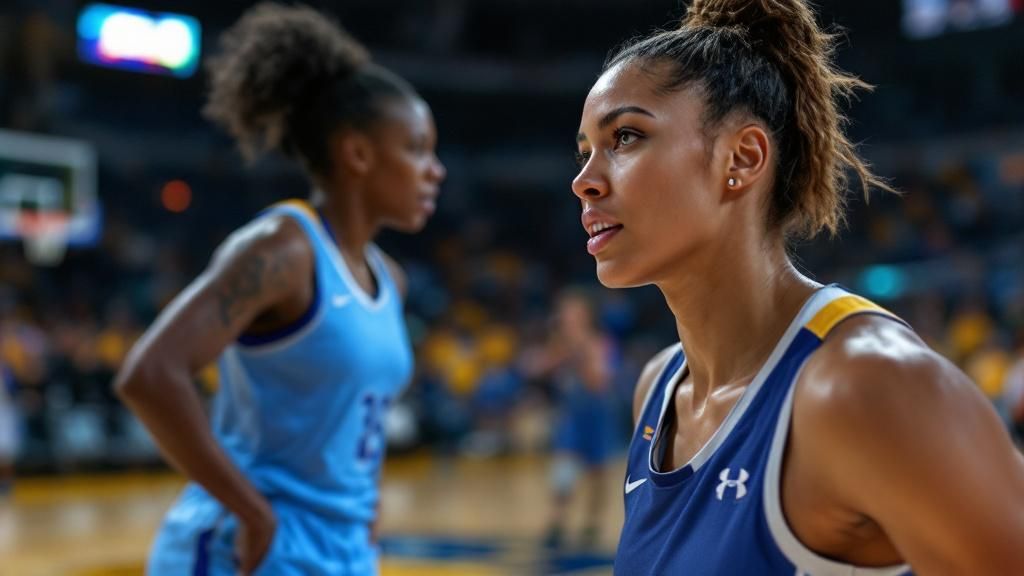
Women’s basketball players across the globe are growing more outspoken in their demands for equal pay and significant funding in their sport. Despite years of athletic excellence and increasing spectator support, female athletes continue to earn significantly below the earnings of their male counterparts, whilst obtaining scant media coverage and sponsorship opportunities. This article examines the continued effort for parity in professional basketball, analysing the structural obstacles players face, the monetary rationale supporting their demands, and the fundamental reforms needed to guarantee women’s sport gains the recognition and resources it rightfully deserves.
The Pay Gap Challenge in Women’s Basketball
The earnings inequality between male and female elite basketball athletes exemplifies one of sport’s most prominent inequalities. Women competing in elite competitions earn a fraction of their male counterparts’ earnings, with some players receiving annual wages far under the poverty line. This disparity goes further than fundamental wages to include sponsorship deals, endorsement opportunities, and broadcasting rights, generating a cascading disadvantage that damages long-term career viability and professional development for female athletes.
Investment disparities compound the pay gap, with women’s leagues getting limited financial support for facilities, promotion, and athlete development initiatives. Whilst men’s basketball organisations enjoy significant TV agreements and corporate sponsorships, women’s teams struggle with restricted funding that constrain player numbers, standard of coaching, and facility standards. These structural imbalances sustain a cycle where underfunding creates diminished exposure, which in turn supports lower investment, ultimately harming players who merit fair pay for their skill, dedication, and entertainment value.
Capital Gaps and Media Coverage
The economic disparity between men’s and women’s elite basketball continues to be substantial, with funding for women’s leagues falling well short of their male counterparts. Broadcasting companies devote considerably less broadcasting hours to women’s matches, resulting in diminished exposure and sponsorship revenue. This disparity extends to playing venues, coaching resources, and advertising investment, creating a repeating pattern where reduced funding generates reduced exposure, which subsequently supports further budget cuts. The consequence is a structural inequality that undermines the advancement and performance level of women’s basketball globally.
Media attention plays a vital role in shaping the commercial sustainability of any sport, yet women’s basketball receives a tiny share of the airtime committed to men’s matches. Major media outlets often place women’s matches at awkward times or consign them to subsidiary networks, limiting audience scope and engagement. This disparity in airtime directly affects sponsorship opportunities and merchandise sales, leaving female athletes with reduced financial benefits. Tackling these inequalities requires sustained investment from broadcasters, broadcasters, and commercial partners who recognise the unexploited potential and growing fanbase within women’s professional basketball.
Player-Led Movements and Future Prospects
Women’s basketball players have established themselves as strong voices for systemic change, utilising their platforms to address entrenched inequalities and catalyse coordinated efforts. Players such as Sue Bird and Diana Taurasi have established themselves as prominent voices for equal investment, utilising their standing to highlight the disparity between men’s and women’s professional leagues. Their activism has sparked substantive dialogue amongst governing bodies, sponsors, and news organisations, demonstrating that player solidarity can deliver tangible progress. Through structured advocacy efforts and public advocacy, these athletes persistently intensify calls for extensive restructuring across financial remuneration, playing conditions, and media coverage.
The trajectory of women’s basketball relies on continuous commitment from diverse organisations committed to authentic transformation. Progressive policies introduced by leagues such as the WNBA—including increased wage structures and enhanced promotional efforts—offer promising blueprints for international organisations. However, substantial obstacles remain, requiring persistent pressure from players, supportive organisations, and committed fans. The trajectory of women’s professional basketball will ultimately reveal society’s willingness to fairly support female athletes, acknowledging both their remarkable skill and their essential role to the cultural significance of sport.
Moving ahead, the convergence between player activism and organisational reform presents unprecedented opportunities for transforming professional basketball’s future. By maintaining momentum and demanding accountability, women athletes keep forging routes towards true parity, motivating younger generations whilst fundamentally transforming perceptions of women’s sport globally.
