
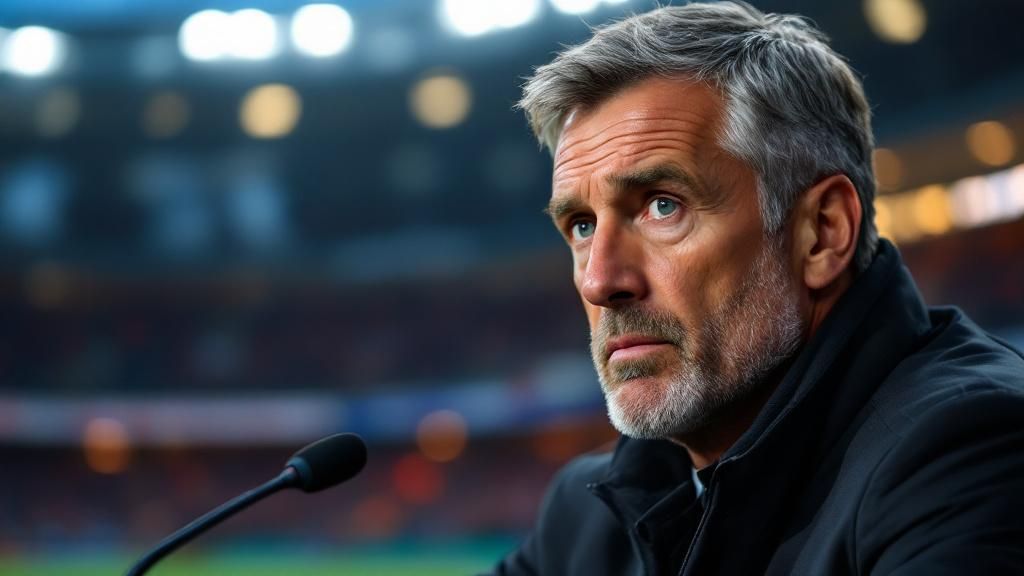
Bosnia-Herzegovina head coach Sergei Barbarez has rejected calls to apologise for his controversial accusations against Brondby’s Welsh manager Steve Cooper in advance of Thursday’s World Cup play-off clash in Cardiff. The Bosnia boss had suggested Cooper excluded midfielder Benjamin Tahirovic from the Danish team due to the Wales qualifier, a accusation Brondby officials firmly rejected. Whilst Tahirovic has later got in touch with Cooper to apologise for the row, Barbarez remained defiant on Wednesday, insisting he had nothing to express regret. Instead, the ex-Bosnia forward suggested his inflammatory remarks were a calculated strategy to protect his young player from scrutiny and divert media attention away from the 23-year-old former Roma and Ajax star.
The Dispute That Lingered On
The controversy concerning Tahirovic’s absence from Brondby’s squad had risked dominating readiness ahead of one of the most important matches in contemporary Bosnian football records. Rather than letting the narrative to fade, Barbarez doubled down on his stance, presenting the entire episode as a calculated manoeuvre to shield a talented young player from escalating pressure. His readiness to absorb criticism and redirect it away from Tahirovic demonstrated a manager prepared to take the heat himself, even if it involved inviting further scrutiny and discussion in the closing stages before the play-off.
Brondby’s communications director Soren Hanghoj had moved swiftly to dismiss Barbarez’s allegations, describing Tahirovic’s absence as solely a club matter unrelated to international commitments. The Danish club’s pointed observation that “there are not that many Wales fans in Brondby” brought an element of wry humour to the ever more peculiar subplot. Wales boss Craig Bellamy seemed satisfied to let the matter rest, having not spoken to Cooper since the latter’s appointment in September 2025, thereby avoiding the entire controversy.
- Barbarez made news to protect Tahirovic from scrutiny
- Brondby denied dropping the central midfielder for international reasons
- Tahirovic offered an apology to Cooper regarding the controversy
- Bellamy declined to address the subplot
A Deliberate Deflection or Legitimate Concern
Barbarez’s Statement
Barbarez’s unwillingness to say sorry came paired with a comprehensive account of his motives, which he portrayed as protective rather than provocative. The Bosnia-Herzegovina manager argued that his controversial accusations had been deliberately engineered to protect Tahirovic from unwanted attention during a crucial phase in the player’s career. By channelling media attention towards himself and the dropping row, Barbarez argued he had successfully created what he termed “a puzzle” for journalists to untangle, thereby diverting focus from the young midfielder’s performance and mindset ahead of such a important match.
Speaking on Wednesday, Barbarez highlighted his confidence in Tahirovic’s capabilities and his two years of experience with the player’s strengths. He emphasised that shielding his players from outside pressure represented a fundamental element of his management style, notably for young players still developing their careers at the top level. Rather than interpreting his statements as inflammatory, Barbarez positioned them as a deliberate tactical choice meant to shape the mental atmosphere around his squad in the ultimate preparations for Thursday’s clash.
Brondby’s Statement
Brondby’s communications director Soren Hanghoj quickly rejected Barbarez’s narrative with a categorical rejection of the claims. The Danish club’s statement stressed that Tahirovic’s exclusion from the team represented purely an internal club decision, completely separate from any considerations regarding international commitments or fixtures. Hanghoj’s response was notably measured yet firm, leaving no ambiguity about Brondby’s position while also adding a touch of humour to the exchange with a jest concerning the lack of Welsh supporters among the club’s supporters.
The club’s commitment to handling the matter openly, combined with their explicit distinction between domestic and international football, largely shut down further argument from their viewpoint. By characterising the decision as routine club business rather than a reaction to external demands, Brondby sought to normalise Tahirovic’s absence and keep it from becoming a source of distraction for either the player in question or the national team’s preparations. Their response indicated a professional body keen to move beyond the controversy and direct focus where it belonged: on the field.
Bosnia’s Route to World Cup Success
Bosnia-Herzegovina’s journey to the 2026 World Cup has proven challenging, with the nation presently sitting at 71st in the international table. Their hopes of reaching a first World Cup since 2014 now depend completely on Thursday’s play-off encounter in Cardiff. The Bosnians just fell short of direct qualification for the tournament, ultimately beaten by Austria in their final fixture when they conceded a late goal in Vienna. This defeat has left them in a precarious position where anything less than victory against the Welsh side would signal the end of their World Cup hopes for this qualification cycle.
Barbarez’s squad approaches the match with careful planning, having taken three days examining lessons from their loss in Austria and creating contingency plans for every possible scenario. The manager has stressed his confidence regarding the encounter, noting that these high-stakes knockout encounters represent the peak of international football. Should Bosnia secure victory from the Cardiff match, they will book a home final against either Italy or Northern Ireland on 31 March, providing them with one final opportunity to claim their place on the grandest stage of football.
| Team | Current Status |
|---|---|
| Bosnia-Herzegovina | Play-off semi-final against Wales |
| Wales | Play-off semi-final against Bosnia-Herzegovina |
| Italy | Play-off semi-final against Northern Ireland |
| Northern Ireland | Play-off semi-final against Italy |
- Bosnia ranked 71st globally, seeking maiden World Cup appearance since 2014.
- Winners face Italy or Northern Ireland in domestic final on 31 March.
- Barbarez’s team has put in place backup strategies for extra time and penalties scenarios.
Experience and Ambition Collide in Wales
Wales will present a stern test for Bosnia-Herzegovina on Thursday night, with Bellamy’s team harbouring their own World Cup ambitions. The Welsh have put together a competitive outfit keen to defy the odds and reach the final play-off round. Bellamy, who took charge of the national side at the start of the year, has instilled a sense of purpose and tactical discipline into the squad. The Cardiff City Stadium will provide an electric atmosphere, with Welsh fans generating an intimidating environment for the Bosnian visitors. Both teams understand the importance of the match, with only a single team capable of continue their journey towards the World Cup in North America in North America.
The rigour of knockout football requires not merely technical proficiency but also psychological strength and resilience. Barbarez’s Bosnia side have displayed their potential to compete at the highest level, though their ranking of 71st globally suggests they remain considerable underdogs in this encounter. Wales, conversely, will draw confidence from their home ground benefit and the fervent backing of their following. The contrast between the two nations’ recent form creates a fascinating story, with Bosnia chasing redemption following their narrow Austrian defeat, whilst Wales chase their own ambitions on the global arena. Thursday’s match is set to provide a compelling spectacle of European football at its most pivotal.
Key Players and Tactical Preparation
Benjamin Tahirovic, the 23-year-old central midfielder at the centre of the recent controversy, epitomises one of Bosnia’s finest creative players. His experience at Roma and Ajax has furnished him with the technical acuity and poise needed for such challenging matches. Barbarez has carefully crafted his tactical strategy, putting in place backup strategies covering extra time and penalty scenarios. The manager’s strategic foresight demonstrates a thorough grasp of knockout football’s unpredictability, ensuring his team stays psychologically ready for any outcome that could occur during the ninety minutes and afterwards.
